Detroit seeks to block texts in dancer’s case
Detroit — The city of Detroit has objected to the admissibility of 35 of the 36 text messages identified by federal magistrate judges as possibly relevant to a lawsuit brought by the family of slain exotic dancer Tamara “Strawberry” Greene.
In a court filing today, the city said some of the text messages are irrelevant because they are dated more than six months before Greene was killed on April 30, 2003, and others are irrelevant because they were sent months after her killing but make no reference to the event or the subsequent police investigation.
To comply with an order by Chief U.S. District Judge Gerald E. Rosen, who is handling the case, the city had to file its objections to admissibility of the text messages without giving away what the messages say.
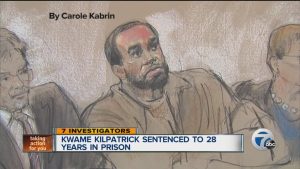
Greene, 27, was linked to a rumored party at the mayor’s Manoogian Mansion in the fall of 2002. Her family is suing former Detroit Mayor Kwame Kilpatrick and top city and police officials, alleging the investigation into Greene’s still unsolved killing was obstructed for political reasons.
Kilpatrick and the other defendants deny the allegations.
U.S. magistrate judges spent months poring through more than 600,00 text messages sent by city employees before this month identifying 36 text messages as possibly relevant to the case. Lawyers for the city and the other defendants were given a chance to review the text messages and object before they are turned over to Norman Yatooma, the lawyer for Greene’s family.
Yatooma, speaking tongue in cheek, said he welcomed the changes in administration since Kilpatrick left office because the Kilpatrick administration would have objected to all 36 text messages, not just 35.
Mayer Morganroth, a lawyer for defendant Christine Beatty, Kilpatrick’s former chief of staff, said Friday a lawyer from his office has also reviewed the text messages. Morganroth has yet to file his objections.
Also Friday, Michigan Attorney General Mike Cox said he wants to testify in the civil lawsuit.
Cox investigated the party allegations — but not Greene’s killing — in 2003 and determined the stripper party was an urban legend.
He said Friday his office is not involved in the homicide investigation and that precedent precludes the attorney general from testifying in a case like this.
But he is offering his testimony regardless.
Associated Press contributed.